
Elizabeth Bishop Peeks Out
Mastering the Art of Hide-and-Seek

If Elizabeth Bishop had a better childhood, she might have mastered the art of playing hide-and-seek at a young age. Instead, she waited to master that art — along with the art of crafting perfect poetry — until adulthood. And indeed she became a master of both.
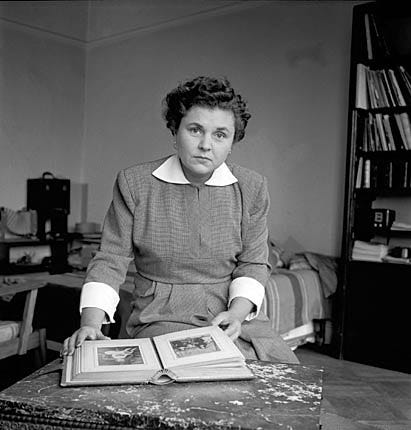
Bishop is one of 20th century America’s most admired poets, and her reputation only continues to grow. When I read her poetry, I hear a quiet, thoughtful, compassionate voice, always attentive to illuminating details, sometimes surprisingly funny, telling me about small but heightened experiences occurring in real places: visiting the dentist’s office as a child with her aunt, listening to the people on a bus or out on the street from her window, at home with her grandmother, or looking at a family relic. If her friend and mentor Marianne Moore placed “real toads” in her own imaginary gardens, Bishop’s gardens of poetry are filled with real people, whether a dear friend whose hair she tenderly washes or anonymous street children playing in the dirt. And her gardens are real places, too, whether in Brazil, Nova Scotia, New York, Worcester (Massachusetts), or Florida - all places she lived.
Even when she used the most demanding poetic forms, she wrote so fluidly and coherently that you might not even realize she has expertly written a rhymed Petrarchan sonnet in decasyllabic iambic pentameter.1
On the surface, Bishop always feels within reach because she uses ordinary language in a conversational and unpretentious tone. She was not a heady poet-philosopher or a pompous poet-academic or an artistic insurgent. She was, as poet James Merrill said, a great poet doing a “lifelong impersonation of an ordinary woman.” An ordinary woman who saw mystery, beauty, and absurdity in the world’s things. And who experienced great joy and great sadness, camaraderie and isolation, and the love and, always, the loss, in living. Whether or not the poems are about her, she made them accessible to her audience.
Accessibility is often not the case in the best poetry. In his essay “On Difficulty,” literary critic and philosopher George Steiner described poetry as “the language-act most charged with the intent of communication, of reaching out to touch the listener or reader in his inmost.” Which led Steiner to a great question: why, then, is so much poetry “opaque, resistant to immediacy and comprehension”? He identifies various types of difficulty that challenge the reader: contingent (references and words you have to look up), modal (syntactical, lexical, or stylistic techniques), tactical (using obfuscation, ambiguity, or experimental techniques), and ontological (challenging our sense of a stable self, existence, or reality, or raising metaphysical questions).2
At least on the surface, these categories of difficulty - certainly familiar to readers of modernist poets like T. S. Eliot or Wallace Stevens or of so many contemporary poets whose work graces the unread pages of, say, the New Yorker) - are not impediments to Bishop-reading. In all of her output, it is unusual to find a word most people wouldn’t use in ordinary conversation. Obscure words are rare. Occasional geographical names or names for flora or fauna might need to be looked up, but the sense of the poem is intact even without the external reference. She does not make obscure classical references, use foreign phrases, or create neologisms.
It would seem that Elizabeth Bishop wished to be found and understood.
But there is always more beneath the surface of a Bishop poem. It seems that she mastered the art of hiding. It isn’t hard to do! You can hide in the bushes from your childhood friends. Or you can hide in the closet. Or leave the country for years. Or write perfect poetry that looks like a refreshing glass of water but goes down like gin. It wasn’t hard for her to master.
It turns out, though, that posthumous hiding is very hard to do, especially if an increasingly interested public is looking for you. Since Bishop’s death in 1979, there have been several biographies, publication of her early drafts and of unpublished poems, access to her archives at Vassar, and a fat edition of her correspondence, including letters to and about her beloved psychoanalyst. She did not take her secrets - her childhood traumas, her enduring alcoholism, her love affairs, her griefs - to the grave.
The School of Anguish
Bishop came to her greatest acclaim at the same time that poetry turned deeply personal and made a public landscape of a poet’s interior life. The Modernist impersonality championed by T.S. Eliot and the restrained neo-formalist elegance of mid-century poets like Richard Wilbur gave way to the so-called “Confessional” poets (although none would use that word to describe themselves). Springing free from social mores that frowned on frank disclosure, the Confessional poets openly explored their private anguish, painful upbringings, disastrous spousal relationships, or madness. Although the private experience of artists nourished the Muse long before Confessional poetry made an aesthetic out of it, the direction and meaning of poetry in the late 1950’s embraced a kind of radical self-disclosure that altered the balance between poetic imagination and metaphor on the one hand and psychological and biographical reality on the other.
The triumvirate in the “School of Anguish” (as Bishop called it) was Sylvia Plath, Anne Sexton, and Bishop’s dearest lifelong friend Robert Lowell, although these three were by no means the only poetic analysands. Associated with an entirely different “school” of poetry, Allen Ginsburg might also be included here, since he, too, loudly howled from the inside out. John Berryman, for sure. W. D. Snodgrass, for starters. Even to some extent Adrienne Rich, who remade her poetry as she remade herself. Currently, Sharon Olds occupies the emeritus seat in the School.
In the late 1950’s, poetry suddenly got very personal and very emotional. Soon, everyone was talking about their mother. Go here, here, and here.
In the midst of these inner mounting flames, Bishop maintained what Lowell called a “seemingly dispassionate coolness.” Her poems are calm, careful, poised, restrained, and quietly looking for answers. They do not show off, they do not shout, weep, or pose. “She makes the casual perfect,” Lowell said. Of the confessional poets, Bishop demurely said, “I wish they’d keep some of these things to themselves.”
But Bishop did not keep “these things” to herself. She talked about her long-lost mother, but first to her psychoanalyst in the 1940’s and later in her prose. She was not a “mommie dearest” poet. But Mother nonetheless slipped like a nameless wraith into Bishop’s poems of loss and longing.
Her poetry has powerful emotional currents beneath the pristine surface of the narrative and formal elements. But she doesn’t invite us to dive into the wreck with her. Reading her work is more like peering into a deep well. What is down there? Better look more closely, read again. For once, then, something.
Hiding under the book covers
Three central struggles in Bishop’s life often seem near the surface like a great iridescent fish that is glimpsed but never caught.
(1) For all intents and purposes Bishop was an orphan — in fact, her state was worse than orphanhood. Her father died in 1912 when she was eight months old, and her mother soon descended into an unmanageable, screaming madness. Had Mother died earlier than she did, she would have spared her child and family the next twenty years of travail. She was institutionalized when Bishop was three and, after causing heart-aching family turmoil, disappeared into an institution when Bishop was five and never returned. Elizabeth never saw her again, and Mother was not to be discussed. But her piercing howls echoed, and her disappearance left a ghostly presence for Elizabeth.3
These early tragedies were compounded by that fact that Elizabeth, an only child, was left without a permanent home or stable parental figures. In her early years, her mother’s family offered ample love and barefoot summer days in Nova Scotia. She loved her maternal grandparents who provided as nurturing an environment during her mother’s illness as they could. But the family had little money and lived a hardscrabble life.

On her father’s side was money and social prominence in Worcester, Massachusetts. After her father died, Bishop was brought to her paternal grandparents’ affluent household “unconsulted and against my wishes” to avoid “poverty and provincialism.” She was lonely and miserable. Little emotional warmth came from the grandparents, and a villainous uncle sexually and emotionally abused her. With her keen eye for detail, she later wrote, “At night I lay blinking my flashlight off and on, and crying.” After several years she moved back with her mother’s family, this time in South Boston, which she loved, and Revere, MA. A trust fund from her paternal grandparents - hardly the norm for the children of South Boston or Revere - ensured her an education at a tony preparatory school and, eventually, Vassar College.
Home, place, geography, travel - and the fact that Bishop never truly belonged in any one place - form a continuous and disquieting theme in her life and poetry.
(2) A second great hardship starting in early childhood was Bishop’s debilitating chronic asthma. Any serious illness before the rise of modern medicine was to be feared, and death in families was never far away. Adding to the loss of her own parents, her affluent paternal grandparents lost five of their eight children, three in childhood. Bishop’s sickliness could not have been a welcome guest for her parent-surrogates who were emotionally ill-equipped to properly deal with it. An undercurrent of vulnerability and insecurity would flow directly into her poetry.
(3) Last, by the time Bishop was an undergraduate in Vassar College in the early 1930’s, she was beginning to sort out the fact that she was a lesbian. Preternaturally shy, she always exercised a prim restraint in self-presentation, whether in clothing, public speech, or poetry. Emerging in the 1940’s as a public figure in American culture, Bishop faced headwinds simply as a poet who happened not to be a man. She disliked being categorized as a “woman poet,” rather than just a “poet.” But her lesbianism was another order of magnitude for a person as veiled and private as she.
She kept it to herself, even (and especially) as her recognition and acclaim grew. She served as the Consultant in Poetry to the Library of Congress (a precursor to the U.S. Poet Laureate) from 1949 to 1950, and she won the Pulitzer prize in 1956. But this was during a period when America’s joint abhorrence of communism and homosexuality destroyed careers and lives. Perhaps it is no accident that several of Bishop’s great love affairs took place in Brazil, far from the American spotlight.
Sadly, Bishop’s “cure” for pain was alcohol, and her insurmountable alcoholism persisted throughout her life. She would dry out, then fall back into the bottle, and she often expressed shame and frustration over her failure to control it. As biographer Megan Marshall notes, “For Elizabeth, poetry and alcohol had long been twin companions.” The difference between them was that her poetic muse could be an unreliable friend, but the bottle was always there. Whiskey worked in two directions: it blotted out pain and it provided inspiration, dreams, and access to emotions. It ran through her veins and into her intimate relationships. And, some think, into her work.
Coming Out
As a first-year college student Bishop was tagged by an alert English teacher as someone “doomed to be a poet.” By her junior year her artistic reputation was sufficiently established that she was selected to interview T. S. Eliot during a visit to Vassar. By her senior year she was a bit of a campus celebrity. And, after dating several men, she tumbled into love with her suitemate - a woman who returned her friendship but not her ardors.4
As a poet and and a lover, Bishop’s path was set.
Throughout her life, Bishop was always passionately in love with another woman, and sometimes two. By contrast, as a poet her creative output was less plentiful: she published only about 100 poems in her lifetime (and she did not leave trunks filled with unseen work). She was a copious letter-writer and she published essays, but the poems waited to become perfect. She would re-work them often for years.5 Her sense of craft demanded it. She struggled with writer’s block, fretting whether she would ever write another poem. And yet they would come. The last book published in her lifetime, “Geography III” (1976), had only 10 relatively short poems. But what poems they were! “In the Waiting Room,”, “Crusoe in England,” “Poem,” and, most famously, “One Art” are among her best and most anthologized pieces.
Hiding in meter and rhyme - the poems
Much has been written about how Bishop balanced concealment and self-revelation, passion and restraint, in her poetry. Everything she writes seems to be made out of her own life’s stuff, her experiences and memory, and she faithfully tells the truth about it — even as she keeps us firmly at arms-length. She withholds more than she tells.
But a poet cannot be silent. They have their reasons and ways for speaking to the world through their art. As one academic said,
“She seems to be telling us something personal, vital, crucial, autobiographical, but she does not let us know exactly what it is. Bishop's poems, in particular, present a fascinating study of the autobiographical pact, because they project the feeling that the author—in the very act of sharing a memory—is hiding something crucial from the reader.”
The truth is, Bishop could she never be a poet in the School of Anguish. She had a “Scotch-Canadian-Protestant-Puritan” temperament, she told Adrienne Rich, that wouldn’t permit such frankness. She had had a “prize unhappy childhood almost good enough for the textbooks,” as she described it, but refused to dote on it, exaggerate or invent facts for effect or pity, or mythologize it in poetry. Even as everyone’s world of inner pain came out into the literary open in the 1950’s and 60’s, poetry had long provided Bishop a stable space and constraining symmetries for a private self-examination of her difficult life. And always, as good poetry should do, for hinting at the universal in what she saw and felt.
She told the truth in her poetry, but she told it slant.
Letting the Poems Speak for Themselves
Reticent by nature and always circumspect, Bishop did write love poems. The great emotion, though, is in the layers beneath a composed surface. For example, The Shampoo:
The still explosions on the rocks,
the lichens, grow
by spreading, gray, concentric shocks.
They have arranged
to meet the rings around the moon, although
within our memories they have not changed.
And since the heavens will attend
as long on us,
you've been, dear friend,
precipitate and pragmatical;
and look what happens. For Time is
nothing if not amenable.
The shooting stars in your black hair
in bright formation
are flocking where,
so straight, so soon?
-- Come, let me wash it in this big tin basin,
battered and shiny like the moon.
Many of Bishop’s poems save the “big reveal” - if there is such a thing in her work - until the last lines. In “The Shampoo,” it is not until then that I understand this short poem to be a love poem. The opening sure doesn’t give it away. How many love poems in the history of the world begin with an image of “lichens” on rocks? Rather than a bedroom, the poem opens in nature where the lichens are likened (sorry!) to “still explosions on the rocks” - “still explosions” is quintessential Bishop! - that slowly spread to “meet the rings around the moon.” The narrator tells her “dear friend” that “the heavens will attend as long on us.” But it is not until the final lines when the speaker offers to wash her friend’s black hair in “this big tin basin,/ battered and shiny like the moon” that I infer that love is in the air. Other than in a hair salon, the washing of another’s hair is an intimate act. Here, it stands in for all the erotic intimacies of a romantic relationship. The “still explosions” that meet the “rings of the moon” beyond “our memories” reminds me of another, less disguised love poem’s opening line: “Had we but world enough and time.”
Yet, like an Elizabethan sonnet, the poem reveals nothing about the speaker or the dear friend (other than her black hair), remaining gender-ambiguous and discreet. It is not the “mistress” who is being coy in this instance; it is the poet.6
“The Shampoo’s” amorous intimations would have been well understood by Bishop’s Brazilian lover, Lota de Macedo Soares, a passionate, strong-willed upper-cruster with whom Bishop fell madly in love. Their relationship lasted for 15 years, and it was a beautiful, intense, mutually energizing affair that ended, as much in Bishop’s life, in sorrow. (I highly recommend the 2013 movie Reaching for the Moon which, despite flaws, captures the beauty and tragedy of the relationship.) Bishop loved washing Lota’s hair, which (according to biographer Marshall) was “black with silver streaks on either side” (hence, the “shooting stars”), and the shampooing became a ritual between them.
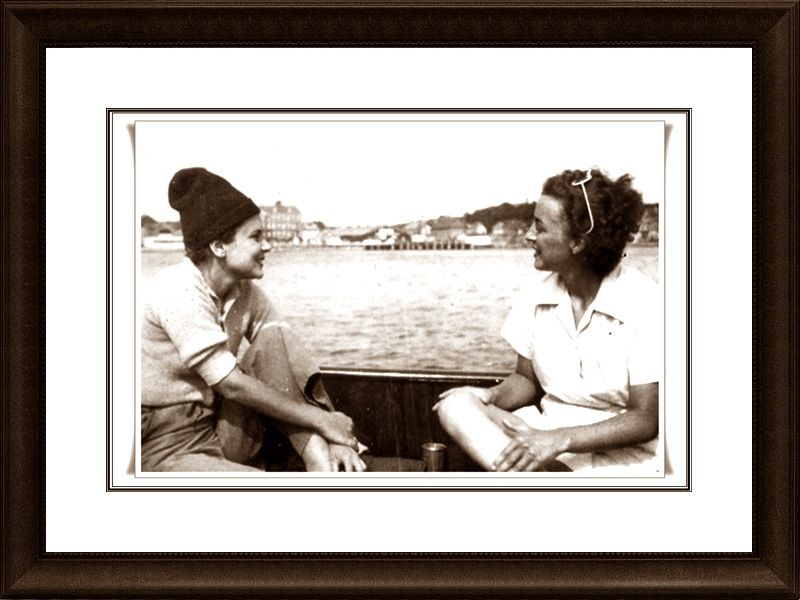
But without the biographical scaffolding available to modern readers, one would not know the details of this love letter from Bishop to her lesbian lover in Brazil. Certainly no one at The New Yorker magazine would have know these facts in 1952 when Bishop submitted it. And yet, although the New Yorker at that point published whatever Bishop sent in, in this instance it politely declined. Did the poem disclose too much, Bishop worried in a letter to her friend and poet May Sarton? Was there was “something indecent about it I’d overlooked?”
“The Shampoo” was hardly the poetic equivalent of a Pride Parade. It was a poem that could be about any lovers of any gender in any place. And yet Bishop fretted about the possibility she had disclosed too much.
It was precisely this kind of self-abnegation and withdrawal that troubled the awakened Adrienne Rich. While Bishop disliked being called a “women poet,” Rich proudly identified as a woman poet, a lesbian poet, a feminist poet. “To write directly and overtly as a woman,” Rich said in a 1983 essay Blood, Bread and Poetry, “out of a woman's body and experience, to take women's existence seriously as theme and source for art, was something I had been hungering to do, needing to do, all my writing life. It placed me nakedly face-to-face with both terror and anger…”
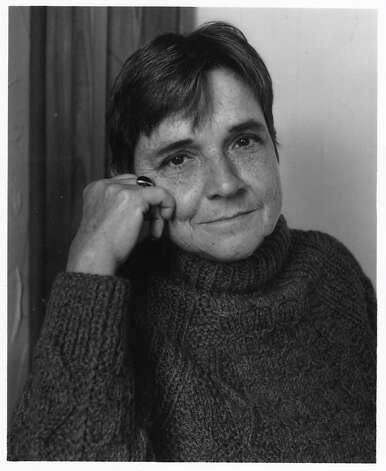
But Bishop wished only to speak for herself, not for women, not for others. She didn’t want to be known as a “woman poet,” and when Robert Lowell referred to her as “one of the great woman poets,” she told him that there were only poets, not men poets and women poets. She had become a feminist in her life but not in her poetry.
Nor did she self-identify as a lesbian poet, even as major tectonic social shifts in gender and sexuality were underway, and poets like Rich were shedding the “mental colonization” of a patriarchal poetic tradition. Where Rich applauded the anger and rage in women’s poetry and prose, Bishop’s verse never seems angry.
Nor could she be a political poet, either as a young poet in the 1930’s Depression when artists could not ignore the breadlines here or the darkening clouds in Europe or as an established poet in the 1960’s when revolution was in the air here and abroad. In her early years, Bishop sympathized with leftwing causes, but at most some of her poems are tinged, but never steeped, in the politics of the era. In the 1960’s, when poets like Rich and Lowell were cause-driven and writing about war and patriarchy in verse that was as performative and polemical as prosodic, Bishop did not follow.
Her poetry came out of her life, out of her experiences, memories, griefs, loves, and losses, all of which created a unique self in need of expression. Perhaps her most well known poem is “One Art,” written in 1975 toward the end of her life.
The art of losing isn’t hard to master;
so many things seem filled with the intent
to be lost that their loss is no disaster.
Lose something every day. Accept the fluster
of lost door keys, the hour badly spent.
The art of losing isn’t hard to master.
Then practice losing farther, losing faster:
places, and names, and where it was you meant
to travel. None of these will bring disaster.
I lost my mother’s watch. And look! my last, or
next-to-last, of three loved houses went.
The art of losing isn’t hard to master.
I lost two cities, lovely ones. And, vaster,
some realms I owned, two rivers, a continent.
I miss them, but it wasn’t a disaster.
—Even losing you (the joking voice, a gesture
I love) I shan’t have lied. It’s evident
the art of losing’s not too hard to master
though it may look like (Write it!) like disaster.
A reader needn’t know anything about Bishop to respond to the universal experience of grappling with loss, of persuading yourself you’re fine, you’re fine, while secretly knowing you’re not. And a reader needn’t know that this poem is a highly structured villanelle to hear its obsessive rhymes and repetitions, sense its irony (is losing really an art?), and feel its momentum building. The narrator is trying so very hard to cope, to sooth a pain she cannot master. The parenthetical “(Write it!)” and the stuttering “like” before and after the parentheses say so much with so little.
Each detail in “One Art” has its roots in Bishop’s life. OK, I am guessing that she actually lost her keys at some point. And forgot names and places. Who hasn’t? And the Marshall biography doesn’t say whether Bishop actually lost her mother’s watch. But she certainly did lose her mother. And the lost “watch” itself could be a time piece or it could be a mother’s “watchfulness” over a daughter. Bishop lost houses where she once lived, cities she loved, two rivers she traveled on in Brazil, and the continent of South America where she had been so happy for a while with Lota. And finally, in the 1970’s when she wrote “One Art,” she lost the younger woman with whom she was then deeply in love, Alice Methfessel, who left her to get married. Methfessel was Bishop’s lover, companion, secretary, caretaker, and the sole beneficiary of her will, and Bishop’s love for her was matched only by her need for her.7
Is the poem about losing Alice? There is nothing in it that identifies Methfessel as the “you” who is lost. As biographer Marshall learned, Methfessel’s “blue eyes” were in the poem until the fifteenth and final draft, when Bishop struck those words. What was her reason? Was she again guarding against too much personal disclosure? Or expanding the roster of lost loves to include the dark-eyed Lota? Or was she universalizing the experience of loss by stripping away the particulars?
The answer is unimportant. Or perhaps the answer is that Bishop was achieving all three goals with her final edit. “One Art” clearly emerges from Bishop’s own life but speaks with clarity to the hearts of millions.
Hiding in the Open
Sometimes I think that the genius of Bishop’s poems is that, in balancing disclosure and privacy, she puts us as readers into her childhood shoes. She openly invites us into her world but we don’t understand everything going on there. It’s a game of emotional hide-and-seek. There were unsaid things in her childhood just as in her adult poetry. Consider First Death in Nova Scotia (death of cousin Arthur), Manners (riding a wagon into town with grandfather), In the Waiting Room (reading a National Geographic while waiting for her aunt), and Sestina (grandma’s inscrutable house): in each there is a bewildered child, silently struggling to understand.
Which sometimes what reading Bishop feels like. She’s not confiding in you but she is letting you see the world through her eyes. How can we not see where she is hiding? How much closer to a poet can you get than that?
Her poem “I am in Need of Music” is the best example of this. A Petrarchan (or Italian) sonnet has one eight-line stanza (“octet”) followed by a six-line stanza (“sestet”), and it must follow a prescribed rhyme scheme. Metrically, each line must be in iambic pentameter, meaning it has five “feet,” or beats, each of which has an unstressed first syllable with a stress on the second: “buh-BAH-buh-BAH…” etc. Decasyllabic lines have exactly 10 syllables. Bishop’s poem about needing and loving music fulfills all the poetic constraints that Petrarch modeled in the 14th century to express his unrestrained love and need for his inamorata.
Steiner writing an essay about difficulty is like a poet writing a poem about poetry: they enact the very thing they are writing about. “On Difficulty” is contingently, modally, and ontologically difficult, and probably tactically so.
Bishop wrote a lot of prose - short stories, reviews, correspondence. The New Yorker published “In the Village,” a memoir of her childhood in Nova Scotia. The opening line is, “A scream, the echo of a scream, hangs over that Nova Scotian Village.” The piece is poetry in prose, recreating the poignant details of a long-ago time and rural place with her aunts, the village blacksmith, a cow named Nelly, a purple dress, and hiding from her mother’s madness. If you have a New Yorker magazine subscription, you can find it digitally in their archives (12/19/53 edition).
She also suffered an early failed romance, disastrously so. A young man fell in love with her, proposed marriage and, when she declined, became angry and accused her of “having it in for men.” A year later he committed suicide. His note said, “Elizabeth, go to hell.”
Bishop began writing a poem “The Moose” in 1946 after a bus trip home from Nova Scotia. She finished it in 1972 while living in Cambridge and teaching at Harvard.
In the Elizabethan era, sonnet writing was a dangerous sport. Poets would mask the identity of their subjects so as not to publicly offend the wrong people. If Shakespeare’s effeminate Fair Youth could be too easily tagged as the powerful Earl of Southbridge (and to this day no one knows), Shakespeare could lose his patron and his livelihood. If the volatile King Henry VIII believed that Sir Thomas Wyatt was complaining too loudly in “My Heart I Gave to Thee,” Sir Thomas could lose his head. The “thee” in that poem could be a lover, God, a patron, or a king. Read it how you will.
This story has a happy ending. Methfessel didn’t marry, returned to Bishop and stayed with her to the end, and became her literary executor.