
In an Iridescent Time
Poet Ruth Stone: the flutter of memory

The lives of our parents before we were born are a natural source of fascination for us. Do you have a photograph of your biological mother or father as a child? Or even more startling, of your grandparent as a child? Why do such pictures have so much resonance? Why do we stare at those strangely familiar children who cannot possibly have imagined us when the camera’s shutter opened and closed?
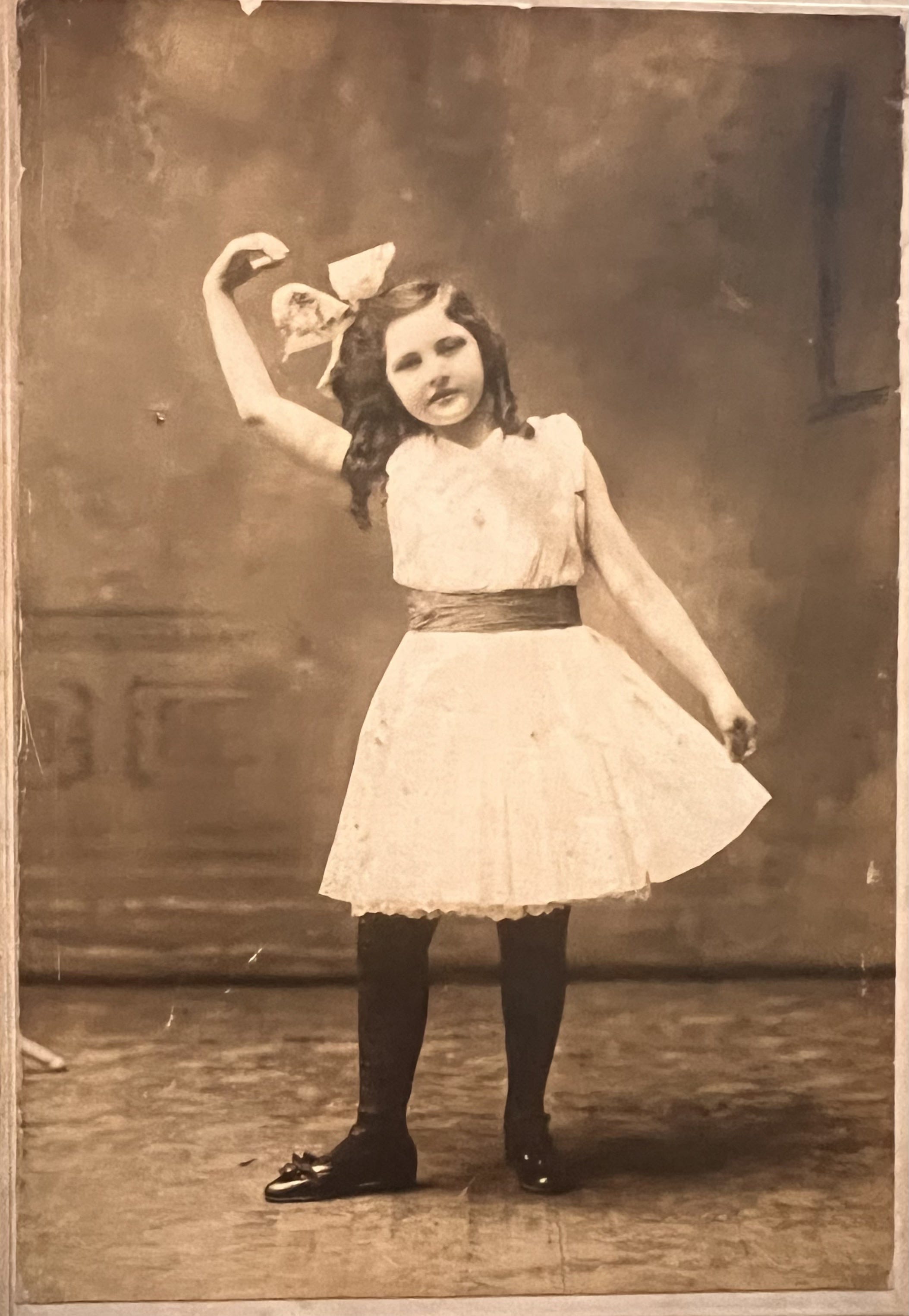
Maybe we are seeing a figment of ourselves where we couldn’t possibly exist. Each of us was as unalive in the singular snapshot moment as we will be after our own lives end. And yet, there is something of us inside that parental child in knickers or pinafores. Maybe a physical resemblance, but even if not, the child of that child — you — are an inchoate fact in the photo. You are like a ghost in the frame not from the past but from the unknowable future.
The present essay looks at a single poem by the wonderful Vermont poet Ruth Stone who passed away in 2011 at age 96, and I want to share my enthusiasm for both poem and poet. I marveled about her life and works in a recent essay, and I invite you to jump over to that piece so you know who this fascinating poet is. Take a few minutes, and then come back.
My method for choosing the poem was simple: I was enjoying a martini out in the backyard, I opened her book What Love Comes To: New & Selected Poems (2008), and I was smitten. I read it repeatedly, like one looks at a vintage family photograph.
The poem is a simple reverie about a moment in the childhood of the speaker’s mother. It is not an important poem, nor is it bursting with self-importance. It is not layered with meaning or weighed down by literary allusion. Rather, it is accessible and evocative, photographic in imagery and color, and poetic in rhyme and chiming vowels. It is as light and lovely as a daydream.
It is also, in my academically-untrained poetic opinion, a successful poem. Successful because something jumps the gap between poet and reader, something that makes me want to read it twice and again. Simple as it is, there are hidden emotions fluttering in the lines.
Ruth makes poetry out of reverie. The memory is her mother’s, and the poem is Ruth’s act of recalling it on her behalf. As in an old photograph, the speaker - the mother’s child - wasn’t there.


The Poem
In an Iridescent Time
My mother, when young, scrubbed laundry in a tub,
She and her sisters on an old brick walk
Under the apple trees, sweet rub-a-dub.
The bees came round their heads, the wrens made talk.
Four young ladies each with a rainbow board
Honed their knuckles, wrung their wrists to red,
Tossed back their braids and wiped their aprons wet.
The Jersey calf beyond the back fence roared;
And all the soft day, swarms about their pet
Buzzed at his big brown eyes and bullish head.
Four times they rinsed, they said. Some things they starched,
Then shook them from the baskets two by two,
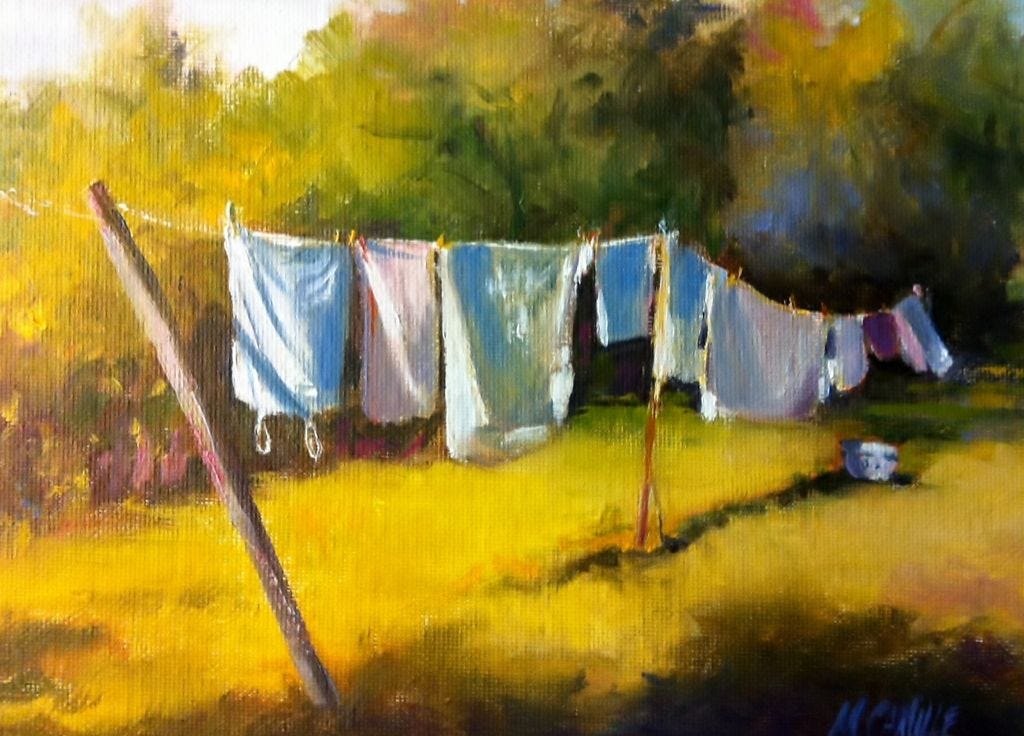
And pinned the fluttering intimacies of life
Between the lilac bushes and the yew:
Brown gingham, pink, and skirts of Alice blue.
The poem’s title is also the title of Ruth’s 1959 book of poetry, her first and only book written before the tragic death of her husband. If you are familiar with Ruth’s poetry (or if you read my earlier piece), you know that his death was like an unmoving dark cloud in her life and works, even on sunny days. But In an Iridescent Time predates the tragedy.
In the poem, the speaker cherishes a memory of her mother’s. The recollection is personal, perhaps autobiographical, something Ruth might have shared with her young family just before picking up the pen.
The first three lines are a complete sentence: My mother, when young, scrubbed laundry in a tub,/ She and her sisters on an old brick walk/ Under the apple trees, sweet rub-a-dub.
The first line is packed with orienting information about who, what, and when. Who? The poem is in the first person - “my” - although there is no further self-reference because the true subject is the speaker’s mother. What? A memory of mother’s early life told by the mother, presumably, to the speaker. When? This is a memory poem, and so it is a present-tense recollection of an event in the past, and likely a long-ago past when laundry was washed by hand in a tub.
After the first line, we learn where the poem’s action takes place: on “an old brick walk under the apple trees” somewhere in the country where mother and her three sisters are washing and hanging laundry. In three lines, the domestic scene is set.
And the sentence ends with those delicious words: “sweet rub-a-dub.” To paraphrase a famous movie quote, the poem had me at sweet rub-a-dub.
That is a child’s phrase, and it signals that the memory is a fond one. Childhood is evoked by its echo of a familiar 18th-century nursery rhyme: “rub-a-dub-dub, three men in a tub.” Or, in an earlier version, “three maids in a tub.” Perhaps three sisters, like the speaker’s. The sisterly rub-a-dub is sweet.
Let’s pause to consider some prosodic elements in the first lines. For one, the rhyme scheme. The first and third lines have an end-rhyme (“tub” and “dub”), and they anticipate the perfect end-rhymes that persist throughout the poem.
Second, the assonance of these words - the uh sound - is repeated six times in those two lines: young, scrubbed, tub, under, rub, dub. (Assonance is when mid-word vowel sounds repeat; alliteration is when consonants at the start of words repeat.) Our ears hear these harmonies in the vowels. Listen as you read the poem again for all the alliteration and assonance that is there throughout the poem: “wrung their wrists to red,” “buzzed - big, brown - bullish,” These sound patterns bind the lines and make a concordant whole.
As the poem proceeds, the natural world is described as a child might see it. The bees fly around their heads (no stings, happily) and the wrens talk in the trees. The “Jersey calf” — itself a youngster — is “their pet” with its “big, brown eyes and bullish head.” Yet it “roars” while safely behind a fence. Poor thing, swarmed by flies!
The rhyme scheme continues with simple words: “walk - talk,” “board - roared,” “red- head,” “wet - pet.” The consistency and simplicity provide a lyrical lilt, broken (amusingly) by the unrhymed and unlovely word “starched.”
Life isn’t necessarily easy for the “four young ladies” with their rainbow washboards. Their hands are made raw by all the washing and wringing and wiping. “Four times they rinsed, they said.” Some parental figure must have demanded to know “how many times did you girls rinse?!” The line gives a sense of the children’s labors — “four times”! — but it also has the cadence of folkloric storytelling. Syntactically, it would be more modern and colloquial to say “they rinsed four times,” but the phrase inversion - “four times they rinsed” - winks at the fairy tale by elevating the diction and prioritizing the number. Numbers play an outsized role in fairy tales and myths, and four sisters rinsing four times alludes to these older sources.
Finally, the sisters take the laundry items from the basket and pin them to dry. It is here toward the end, after lines of verse filled with concrete and specific nouns — laundry, tub, brick, walk, apple trees, bees, knuckles, aprons, big brown eyes, baskets — that we are treated to the first metaphor, beautiful and elusive: “the fluttering intimacies of life.” They are no longer just doing a chore. They are pinning “fluttering intimacies” on the line.
It’s not your mother’s laundry anymore. Yes, real laundry flutters in the wind, and yes, real laundry is almost comically intimate by nature. But what flutters on both the clothesline and the poetic line are the “intimacies of life.” Memory is one of life’s more poignant intimacies: it is yours alone to share.
The “sweet rub-a-dub” of the four sisters hanging laundry out back “between the lilac bushes and the yew” was Mother’s memory of her childhood in a long-ago time and place, a lovely vanished moment existing only in memory. Mother shared the memory with her daughter (the poet) who, by sharing it with us, has kept alive both the memory and a little of her mother.
Iridescence
The poem ends with the time-capsule image of clothing from her mother’s era on the clothesline: “Brown gingham, pink, and skirts of Alice blue.”
Ruth’s mother was born in 1889, so she would have been old enough to wash laundry in a tub by the turn of the century. Gingham was popular then, but brown gingham was less fancy (and less expensive) than red or blue gingham and more utilitarian and everyday. Not surprising it would be hanging on the Ruth family line.

Gingham never really went out of fashion, so “Alice blue” is the better marker of time. Alice blue was a fashion color — a light blue pastel — popularized by Alice Roosevelt Longfellow during the presidency of her father Theodore Roosevelt from 1901 to 1909. Alice was a highly fashionable, elegant, bold, and independent young woman. (Her father famously said “I can do one of two things. I can be President of the United States or I can control [teenager] Alice Roosevelt. I cannot possibly do both.”) Alice was a cultural icon, and in those early years of the new century, Alice Blue became what nowadays we call “a thing.”
What makes that colorful line of laundry so poignant, so iridescent? As I said at the outset, there is something deep in us that is riveted by the childhood of our parents. The towering complex figures in our lives were once children, too, innocent and simple. Long before us, they had toys, they read fairy tales, they played with their siblings, they did household chores.
And so it seems with In an Iridescent Time. The speaker - can we agree Ruth Stone is the speaker? - recalls a memory that her mother handed down to her and, with simple words and simple images, conjures the iridescent details of childhood.
Though the “fluttering intimacies” of our lives are mostly discarded or forgotten, some are handed down in stories from one generation to the next. And some make it into a poem, as short, simple, and evocative as an old sepia-toned photograph.
The lines of a poem can convey iridescence in ways a sepia-toned photograph cannot. Ruth never explicitly tells us whether the sisters were happy or miserable in their chores, laughing or tired, but the tone of the poem tells us the story is a sweet one. And the title, too, which tells us right away it was “an iridescent time.”
The iridescence was hanging on the laundry line. Sweet rub-a-dub.
What a lovely essay. It is as evocative as the poem. Both are works of art and heart. Thank you.
I love your love for poetry. And that you share it. Love is the best teacher. This poem is beautiful! Please never stop writing about poems you love. There are academics and experts everywhere, but you and your lovingkind are rare, and I am so glad to have found you.